Armen Petrosyan's paper on the origins of Bagratid dinasty. He also mentions Hovann Simonian's opinion about the possible haplogroup of Bagratids. Hovann is the admin of Armenian DNA project and other projects.
In ancient texts they are two versions of Bagratuni (Bagratid ) origin.
The first one is the Khorenatsi's opinion who give Jewish origin from a certain Shambat.
The second one can be called Sebeos version, in which Bagratuni have native Haykian origin.
Petrosyan like most scholars agree that the version of Jewish origin is a post-Christian invention. Khorenatsi himself was also aware of the second opinion and he advise to not believe in it.
So let's look closer to the native version.
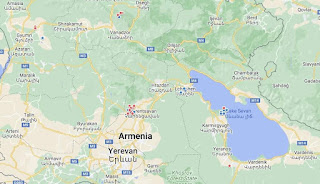
In native version the founding fathers of this family are the Bagam and Bagarat. Their offsprings get the Angeltun province ( House of Angel ) as their own domain. For this reason Bagarat was also known as Angel (Անգեղ) and he was deified by pagan people.
They are good reasons to believe that ancient Armenians had a chtonic god known as Angel. This term has a good Armenian etymology. Meaning either ugly or invisible. From the IE root *wel- meaning to see, which in Armenian gives gel (գեղ ) meaning beauty but also appearance. So Angel would be either ugly or unseen, without appearance. It's remarkable that the Greek meaning of underworld god Hades is similar. It means unseen. Another indirect evidence of the importance of underworld god in ancient Armenia is the fact that the chief god of Hayasa was the equivalent of Nergal. Incidently in Armenian scripts the term Angel is used for Nergal.
So it's safe to assume that the pre-Christian legend about the Bagratuni origin was related to this Angel god. Most probably they were claiming descendancy from this god. With the arrival of Iranian influence a new term was coined based on Iranian god names. Bagarat itself descend from the Iranian name Bagadata which means god given or son/gift of god. So instead of being gift/son of Angel they became gift/son of Baga.
It's remarkable that in Khorenatsi's book the owner of Angeltun is the Tork'. This Tork' was written also Towrk' ( Տուրք ). The Tork' form is probably an error, an omission of w. Towrk' in Armenian means gift so basically Turk' / Towrk' Angeleai means gift of Angel. A similar meaning as for Bagadata, gift of Baga. Once more we see that such a concept (gift of Angel) existed in ancient Armenia.
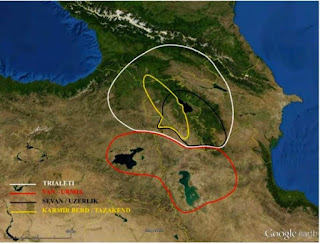
Now all this indirect evidence is nice, but we need something else to check the validity of this theories. Fortunately DNA gives new opportunities. Thanks to efforts of Hovann we have a good candidate for Bagratuni Y dna, which is the I2a2b. The evidence is based on modern people affiliated to Georgian and Armenian noble families like Tsitsishvilis and Hasan Jalalyans. If Bagratuni really had this Y dna then this would mean that they had native origin because we know for sure that practically all modern I2a2b descend from one person who lived in Trialeti Vanadzor culture. So this would mean that ancient pre Christian legends about Bagratuni origins were quite realistic.
Now returning to Jewish connections. It's remarkable that inside I2a2b there is a small Jewish cluster. The age of separation is old but this do not mean much because the real adoption of Judaism could have occured later. So a person of possible Bagratuni or Armenian ( Georgian also, but less likely ) affiliation at some point adopted Judaism . It's possible that this story was echoed in later records.