Category

Showing posts with label Ancient records. Show all posts

Friday, May 1, 2026

The King Pharnavaz (Փառնավազ)


In Armenian historical tradition, the post-Urartian period — which, incidentally, is also the post-Assyrian period — is marked by the emergence of new elites.

In Movses Khorenatsi’s history, the first crowned king of Armenia (after Assyrian rule) was Paruyr Skayordi. He was an ally of the Medes and, according to Khorenatsi, participated in the destruction of the Assyrian Empire. However, the historian Sebeos reports a different story about the same period [1]. He mentions a certain Pharnavaz who was loyal to the Babylonians and was recognized by Babylon as king of Armenia. Afterward, this Pharnavaz and his descendants controlled lands in the southwestern regions of historical Armenia (Ałdznikʿ and Tsopkʿ).

The Assyrian Empire was destroyed by an alliance of Babylon and the Medes in 614–609 BC. After this, Babylonian sources report three additional campaigns in northern Mesopotamia in which the lands of Urartu are mentioned as targets of attack and plunder. It is quite possible that, after the annihilation of Assyrian political influence, Babylon had interactions with rulers located in the southern parts of historical Armenia and recognized one of the local rulers as king. Thus, the reports of the Babylonian Chronicles fit well with Sebeos’s account of Pharnavaz.

The name Pharnavaz is absent from Urartian texts; however, Assyrian texts mention a certain tribe, the Parnaki, dwelling in a region north or east of Assyria, in the northern Zagros. A derivation of the personal name Pharnavaz from the Parnaki tribe is quite plausible and is supported by historical parallels found in Anatolia, where the satrapal Pharnacid dynasty bore both the names Pharnaces and Pharnabazus. The term Pharnavaz itself is composed of two Iranian words: *farna* (“glory,” “splendor”) and *bāzu* (“arm”), which, according to Armenian phonetic rules, could have developed into Pʿarnawaz (Փառնաւազ).

Assuming that Sebeos’s story has a real historical background, we can reconstruct the following chronology of events:


**8th–7th century BC.** A minor Iranian tribe, not directly affiliated with the Medes or Persians, was dwelling near historical Armenia. They are mentioned by the Assyrians. In the Armenian patriarchal list, the name Pʿarnak is also present in ancient times.

**At the end of the 7th century BC.** The destruction of Assyria and the extreme weakening of the Biainean dynasty triggered migrations and the emergence of new elites. The Parnaki tribe most probably settled in the southwestern regions of Armenia, had occasion to interact with the Babylonians, and became part of the local ruling class. It was assimilated by the Armenians, and the memory of King Pharnavaz became part of Armenian historical tradition. 

Another Pharnavaz is also important in Georgian historic tradition. He is the king of Iberia around ~300BC and the founder of Pharnavazid dynasty. I will dedicate a separate post about the possible relation of this two Pharnavaz' and the position of Pharnacid dynasty of Anatolia in all this.

During the same post Assyrian period, or slightly earlier, Paruyr Skayordi was probably ruling in the eastern regions of historical Armenia — in or around the territory of the modern Republic. In that location, Paruyr Skayordi would have had occasion to interact with the Medes, and this memory was recorded by Khorenatsi. It must be noted that Khorenatsi also mentions Pharnavaz as a “grandson” of Paruyr Skayordi, but gives no further information about him. The Urartian cuneiform texts referring to the lands of Išqigulu and to Sagaputra (“son of Saka”) as king may also be interpreted as evidence for a Skayordi domain in the eastern regions.

In conclusion, the end of the Assyrian Empire was also a period of weakening for the Biainean dynasty and of political fragmentation in the Armenian Highlands. New elites appeared, possibly some of Iranian origin, and were assimilated into the Armenian-Urartian cultural milieu. Slightly later, the Orontid (Eruanduni) dynasty emerged and unified the country.

References

[1] Tsakanyan, R., The Versions of Khorenatsi and Sebeos on the Fall of Assyria, VEM, 2017, № 4(60), pp. 230-239, in Arm.

See also


Wednesday, January 31, 2024

According to the link below this coin was minted by the satrap of Armenia Orontes ( Eruand ) who is mentioned in the Xenophon's Anabasis.

According to the link below this coin was minted by the satrap of Armenia Orontes ( Eruand ) who is mentioned in the Xenophon's Anabasis. He was "exiled" to Mysia where he minted these coins. Later he managed to return back to Armenia after organizing a rebellion against the Achaemenid king. The Pergamon inscription mentions him as son of Artašir. We have a thread about this inscription in this group. Links can be found in the comments.

See also


Thursday, November 30, 2023

About the origins of Yervanduni (old Eruanduni, Greek Orontid) dinasty. Part II.

About the origins of Yervanduni (old Eruanduni, Greek Orontid) dinasty. Part II.

In the first part I presented arguments for the Eruanduni homeland near Musasir. In this part I will present additional lexical data that further supports that location. The purpose of this part is not the ethnic origin or etymologies but defining the location. Linguistics and possible genetics will be discussed in the third part.
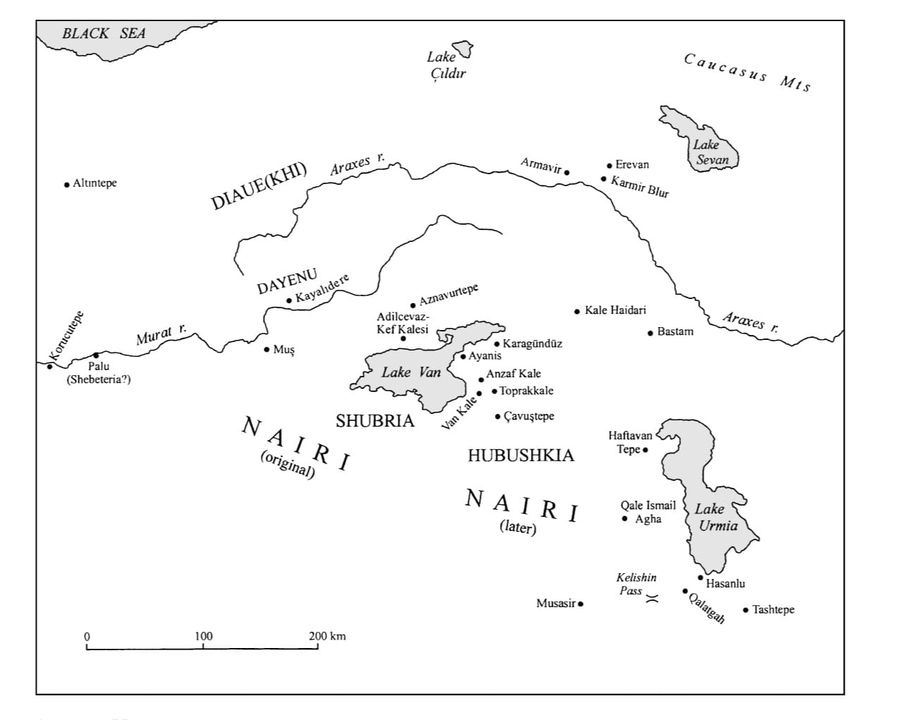
The names discussed below are recorded by the Assyrian king Shamshi-Adad V who campaigned against the Nairi lands during his reign (824-811BC). It's important to understand that the term Nairi after the 850BC denotes a different region than it was in early Iron Age. (See the map) Initially it was denoting a region west of Van while later it was near Hubushkia north of Musasir and Parsua and west of lake Urmia. It was probably larger than it is shown on the map from Bryce encyclopedia. Given that in some cases Nairi Sea means the lake Urmia.
It's remarkable that Pliny the Elder mentions the Orontes tribe exactly in the same region. And apparently in Pliny's text there is a toponym that matchs a term in cuneiform text.
Artasirari - This name is believed to be related to Artašir. The cuneiform /s/ renders the /sh/. Various scholars suggested such a possibility. Artašir was the father of Orontes mentioned in Anabasis. His name is mentioned in Pergamon and Nemrut inscriptions. The name Artash-es is the shortened form derived from Artashir.
The extra syllable at the end is interpreted in different ways Zadok consider it an allusion to a sacred mountain Sirara. Another interesting name is the Artasari who was the king of Paddira a land between Nairi and Parsua.
Šumaya/ Šuma - This name is close to Sam-os (Armenian Sham) who was the son of Orontes who became an independent king at 330bc. He was founder of the city of Samosat, which bears his name. Samosat (modern Samsat) will become the capital of Commagene later.
Zarišu - This name seems to have the same root as Zariathr/Zariadres from which linguists derive the Zareh. Zareh is mentioned in Khorenatsi, a person with that name was the founder of the kingdom of Sophene and another was the father of Artashes I. The Zarišu can't be directly ancestral to Zariaθr unless the /š/ is the cuneiform way to render the voiceless dental fricative /θ/. Similar to Iskuza were /z/ renders the voiced dental fricative /ð/.
Arua - this name is the closest form to Aruand/Aruant (old form of Eruand) from all available names in the Assyrian cuneiforms. Assuming that they are related there are two options. One is that Arua became later Aruand with the addition of some particles. This can explain the name Eruaz also. But this option is less likely than the option when Arua is simply the short form of Aruant. But even if those two names are unrelated it's still remarkable because the root Arua is at the origin of the toponyms like Aruastan and Aruakan present in Armenian sources.
An attempt to find similar terms in more than 50 names related to Medes tribal federation resulted in a failure. There were some interesting names in Medes lands, but they didn't show any connection to the known Orontid dinasty.
Other interesting names found in that Nairi are:
Zabanu     - it can be compared to the name Zawan in Khorenatsi's list of patriarchs.
Šua          - written as šu-ú-a. It can be compared to Suë in Pliny the Elder. Which is an extra argument showing that the tribe Orontes mentioned in Pliny's text is located in the same region as the cuneiform Nairi.
Arima     - which is a land or tribe. According to Zadok the tribes is mentioned later also. Even in Achaemenid period.
Satiriaya   - although this is marked as a personal name in the text it looks like an ethnicon associated to the land Šatiru mentioned in the Urartian texts. Some scholars suggested that both terms in Urartian and Assyrian texts are related. And apparently, they denote a same region toward Musasir from Van.
In conclusion this onomastic data also supports the possible homeland of Eruanduni dinasty in the region which today correspond to Turkish-Iran border starting from Siahkuh mountain (ancient Zarasp) toward the Iraqi border. This conclusion does not mean that this people in cuneiform were directly ancestral to Eruanduni but it's rather pinpointing a region. As mentioned earlier there are no other place with such a concentration of relevant roots.

Related topics


Monday, November 27, 2023

It is usually believed that the name of the Armenian king is not mentioned in the Cyropedia.

 It is usually believed that the name of the Armenian king is not mentioned in the Cyropedia. Indeed, if You read the English translations available on-line You will find phrases like "Armenian king" or "king of Armenians". But not any name. This is odd, because the names of his sons are mentioned: Tigranes and Sabaris. Known as Tigran and Shavarsh in Armenian. Why would the name of the king himself miss?

Sargis Petrosyan has a theory on this matter. He thinks that the name of the king is present there and it is Armenios. The name being too similar to the ethnonym has resulted in a confused translation. According to him Armenios correspond to Other Haykak, which would be the grandfather of Tigran in Khorenatsi list. The one that was contemporary to Cyrus. Haykak is the diminutive of Hayk and if someone translates this name then it will get something like Armenios.
I have found the book in Greek. Unfortunately, my Greek is not sufficient to understand whether the term Armenios in that text a personal name or some kind adjective is.
There are other forms in the text. Like Armenoi, Armenie, Armenion. The first one is a plural the two others might be adjectives.


Sunday, November 12, 2023

Urartu and the Armenian nation

Urartu was a centralized and powerful kingdom that was capable to rival the main power of that period, the Assyrian kingdom. Quite extreme and various opinions are expressed about the Urartu's relation to Armenia and Armenians.

I will not discuss now the usual arguments, but rather will look on this subject from the perspective of nation formation. For this purpose, let's see some examples how well-known nations formed.
French nation speaks a Roman language that they inherited from Roman empire. But we can't say that in Roman empire there were French people. When Western Roman empire collapsed a new strong Frankish kingdom formed in Europe. Franks were a German speaking tribe. Later their kingdom was divided into three parties and one of them became the kingdom of France, where French nation formed.
In medieval period Germany was divided into dozens of kingdoms. In 19th century the Germanic kingdom of Prussia ruled by a Germanic dynasty who had a strong army started to unite the rest of Germany into one state. The name Prussia was derived from Old Prussians who were not a Germanic people but a Baltic people like Litvans and Latvians Today Old Prussian language is extinct. Germanic tribes were living in modern Germany since the Iron Age but only recently a German nation formed. Other German nations formed also based on their respective states. Austrians, Dutch people whose name has common origin with Deutch (German), Danes and others.
All Slavic people were speaking the same mutually intelligible language 1400 years ago. Yet they didn't transform into one nation. Today there are many Slavic nations that formed from different states. Russians for example derive their name from a Scandinavian/Germanic tribe Rus' who created the Kievan Rus' state. After the fragmentation of that state a new Moscow Principality formed ruled by a branch of Rurikids. Recent paleogenetic studies confirmed that Rurikids the ruling dynasty of Kievan Rus' had the N haplogroup typical to Sweden with deep roots from Uralic speakers.
Another example is the Chinese who call themselves and their language Han, from a dynasty that united both Sinitic and non-Sinitic people into one state known as China today.
I can enumerate numerous examples how nations formed, and, in all cases, we will notice a crucial role of a centralized state. This by the way is not something new. It's more or less what social constructionism is saying about the emergence of various social constructs, the nation being one of them.
Returning back to Armenian nation formation it's obvious that we must differentiate the origin of the language and the origin of a nation. It's practically proven now that Armenian language was spoken in historic Armenia since the Middle Bronze Age (~4500 years ago). And Etiuni is the one of best candidate for linguistic ancestor of old Grabar, even though other candidates can't be ruled out at this stage. Recently a notorious scholar David Anthony also adhered to that idea. But the presence of language speakers does not automatically mean emergence of a nation(s). I use the plural because there are many examples that one linguistic group creates multiple nations.
From this perspective it's self-evident that it was the Urartu that leads the foundation of Armenian nation by creating a centralized kingdom with homogenous rules which united many different tribes and polities. Here a citation from our work (Petrosyan & Palyan 2023)
"" The unified language connecting the different regions of the Kingdom of Van became the Armenian, the speakers of which should have been present in the highlands since the Middle Bronze Age.""
There is simply no other candidate for this role in the history of Armenia. Even if we assume that Yervanduni seized the power before the conquest of Armenia by Cyrus in 547BC, even in that case there is still very short time to create some kind meaningful state, that will become the basis of the Armina satrapy in Achaemenid Empire. Another hypothetic possibility is that the legendary Paruyr Skayordi created a relatively strong kingdom centered on Etiuni at the end of 7th century BC, but its somewhat unlikely that it would have the same name as Urartu. Unless off course it enlarged so much to be perceived as a political successor of Urartu.
In any case the main reason why Persians recognized most of Armenia as a one satrapy was the memory of Urartu kingdom in those lands. Persians were obviously aware of Urartu because it attacked them many times. So it's natural that they would create a satrapy known as Urashtu/Urartu in Babilonian. This satrapy permitted to most Armenians to continue to live in the same political entity which further crystalized the Armenian self-identification. If not the Urartu it's quite possible that there would be other satrapies with different borders and names.
As for the term Armina in Persian. There are two possibilities. Persians were using that term since 8-7th century BC, which would mean that Armina refers to the genuine Urartu kingdom. This possibility is very realistic because there are other examples when Persians used alternative names for a well-known polities. Such as Sparda instead of Lydia. Katpatuka instead of Tabal. Huja/Hujiya instead of Elam. Modern Cappadocia and Khuzistan are derived from Katpatuka and Huja respectively. Another possibility is that Armina refers to another kingdom that formed immediately after the Urartu in the same territory. This latter scenario is very unlikely given the short time span and the fact that Babylonians would be aware about the new kingdom and will not use the same name.
In conclusion the modern exonym of Armenians is derived from the Urartu state that united the highlands in to one state, which itself triggered a processus of Armenian nation formation. A processus which continued later also and in Hellenistic era we have the mention of Strabo who says that the whole country was speaking the same Armenian language. As for the origins of ruling class of Urartu and the language used in the cuneiform inscription, they are off course interesting and important subjects. But different opinions on those subjects can't affect the veracity of this conclusion.
PS Relevant links are in comments. I will add also the paper of A. Petrosyan about the possible origins of the term Armenia

Thursday, March 16, 2023

Armen Petrosyan's paper on the origins of Bagratid dinasty

 Armen Petrosyan's paper on the origins of Bagratid dinasty. He also mentions Hovann Simonian's opinion about the possible haplogroup of Bagratids. Hovann is the admin of Armenian DNA project and other projects.

In ancient texts they are two versions of Bagratuni (Bagratid ) origin.
The first one is the Khorenatsi's opinion who give Jewish origin from a certain Shambat.
The second one can be called Sebeos version, in which Bagratuni have native Haykian origin.
Petrosyan like most scholars agree that the version of Jewish origin is a post-Christian invention. Khorenatsi himself was also aware of the second opinion and he advise to not believe in it.
So let's look closer to the native version.
In native version the founding fathers of this family are the Bagam and Bagarat. Their offsprings get the Angeltun province ( House of Angel ) as their own domain. For this reason Bagarat was also known as Angel (Անգեղ) and he was deified by pagan people.
They are good reasons to believe that ancient Armenians had a chtonic god known as Angel. This term has a good Armenian etymology. Meaning either ugly or invisible. From the IE root *wel- meaning to see, which in Armenian gives gel (գեղ ) meaning beauty but also appearance. So Angel would be either ugly or unseen, without appearance. It's remarkable that the Greek meaning of underworld god Hades is similar. It means unseen. Another indirect evidence of the importance of underworld god in ancient Armenia is the fact that the chief god of Hayasa was the equivalent of Nergal. Incidently in Armenian scripts the term Angel is used for Nergal.
So it's safe to assume that the pre-Christian legend about the Bagratuni origin was related to this Angel god. Most probably they were claiming descendancy from this god. With the arrival of Iranian influence a new term was coined based on Iranian god names. Bagarat itself descend from the Iranian name Bagadata which means god given or son/gift of god. So instead of being gift/son of Angel they became gift/son of Baga.
It's remarkable that in Khorenatsi's book the owner of Angeltun is the Tork'. This Tork' was written also Towrk' ( Տուրք ). The Tork' form is probably an error, an omission of w. Towrk' in Armenian means gift so basically Turk' / Towrk' Angeleai means gift of Angel. A similar meaning as for Bagadata, gift of Baga. Once more we see that such a concept (gift of Angel) existed in ancient Armenia.
Now all this indirect evidence is nice, but we need something else to check the validity of this theories. Fortunately DNA gives new opportunities. Thanks to efforts of Hovann we have a good candidate for Bagratuni Y dna, which is the I2a2b. The evidence is based on modern people affiliated to Georgian and Armenian noble families like Tsitsishvilis and Hasan Jalalyans. If Bagratuni really had this Y dna then this would mean that they had native origin because we know for sure that practically all modern I2a2b descend from one person who lived in Trialeti Vanadzor culture. So this would mean that ancient pre Christian legends about Bagratuni origins were quite realistic.
Now returning to Jewish connections. It's remarkable that inside I2a2b there is a small Jewish cluster. The age of separation is old but this do not mean much because the real adoption of Judaism could have occured later. So a person of possible Bagratuni or Armenian ( Georgian also, but less likely ) affiliation at some point adopted Judaism . It's possible that this story was echoed in later records.
The link is below

Friday, March 10, 2023

A tribe Parnaki is attested in Iron Age Assyrian texts

A tribe Parnaki is attested in Iron Age Assyrian texts (Esarhadon period) in North East of modern Iraq.

 I crushed the wicked Parnaki, who live in the land Tīl-Aššurri, which is called Pittānu in the language of the people of the land Meḫrānu.

This tribal name is remarkable because the name P'arnak (Փառնակ) is present in the Khorenatsi's list of patriarchs. It can be found also in toponyms. Such as Kusti-Parnes in Artsakh and P'arnac' in Sasun region and Parnatun. It's not granted that all these terms derive from the same origin. Nevertheless, it's another example when we see that terms that appear in Khorenatsi are not simply random names. Or names that appear only after Achaemenid empire.

There is not much doubt that Pharnacids in Phrygian satrapy or probably Pharnaces in Pontic kingdom derive their name from Achaemenid influence and dynasty. But this tribe's example shows that some of the cases when Parnak is mentioned were already present in the vicinity of historic Armenia before Persian rule. It's even possible that some offshoots of this Parnaki tribe became rulers of Armenia, Pharnavaz for instance.
The name P'arnak is usually derived from the Iranian word farnah meaning glory. It's remarkable that the closest form is the Ossetian and the reconstructed Scythian *farna. Even though its not clear how the shift to [f] occurred. In Armenian the Iranian [f] was rendered as p' փ։

See also


Saturday, February 25, 2023

About Yervanduni ( old Eruanduni , Greek Orontid ) origins. Part I

About Yervanduni (old Eruanduni , Greek Orontid ) origins.

It is frequent that a piece of information detached from his real context can create more confusion than understanding. One such information is the inscription from Pergamon city about the supposedly Bactrian origin of Orontes satrap who ruled Armenia in 4th century BC. The one who is also mentioned by Xenophon in Anabasis.
Elcibekyan presents and discuss this inscription. Here some important things.
+ The inscription is not left by Orontes himself but local Pergamon people after his death.
+ The inscription describes an event when Orontes deported Pergamon city people to another location close to seacoast/gulf.
+ This deportation occurred when Orontes rebelled against the Persian king. It was during the famous Great Satraps rebellion around 362BC. The exact reason of this rebellion is not known but it seems Orontes was unhappy when the Persian king wanted to remove him from Armenia to Western Anatolia as a satrap. So, he organized a rebellion in Western Anatolia after which the Persian king has no choice than to return him back to Armenia.
This same Orontes son of Artasura is also mentioned in Nemrut inscriptions. He is the number 6 in the second picture. From Nemrut inscription we learn once more that his father was the Artasura. But we also learn that he had a grandfather also named Aruandes/Orontes.
This number 4 Aruandes/Orontes might have ruled Armenia before 450BC and neither Graeco-Roman sources neither Armenian source have no information about him. Nevertheless, it is quite obvious that Xenophon's era Orontes (number 6) was not a newly arrived person in Armenia. At last, his grandfather also ruled Armenia. And it is quite unlikely that he came to Armenia from Bactria then moved to Western Anatolia to organize a rebellion there for getting back to Armenia. That doesn't make much sense.
So why do this confusing term Bactria is there in the inscription?
Well, Elcibekyan gives a plausible explanation. In ancient times Bactria was also known as Zariaspa. A similar name existed in ancient southern Armenia. Mountain and a range Zarasp close to those places from where Orontid dinasty possibly originated (mount Siah Kuh near modern Turkish-Iranian border). It's quite possible that Pergamon people simply confused the Zarasp in Armenia with Zariaspa in Bactria. And erroneously assumed that Orontes came from Bactria.
I think that makes a lot of sense and the fact that an unknown Yervand ruled Armenia in the first half of 5th century further raises the chances that Yervand Sakavakiats mentioned by Khorenatsi was a real person that ruled Armenia around 580-560BC.

See also


Friday, November 25, 2022

A forgotten page of Armenian history

It's not directly related to the ethnogenesis of Armenians but given that Christianity became an important part of Armenian identity it is important to know.
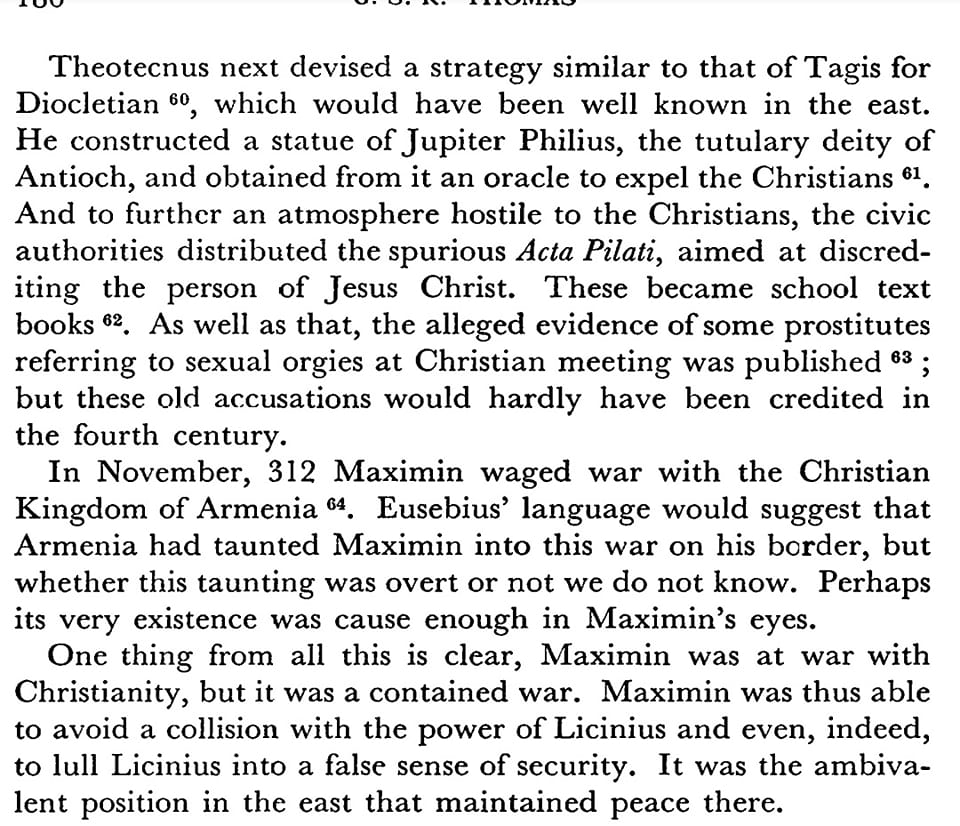
In 312 the tetrarch Maximinus Daza (or Daia) emperor of Eastern regions of Rome attacked Armenia. He was a fervent pagan and antichristian. In most likelihood he wanted to punish Armenia for adopting Christianity in 301. He lost the campaign and the next year he lost the intra roman struggle for power and died in Tarsus (modern Turkey). In 313 emperors Constantine and Licinius decided to stop the persecution of Christians and allowed them freedom of religious beliefs.
This is important to know because many Armenians assume that Christianity was imported to Armenia by Roman state.


Saturday, November 27, 2021

The etymology of the term Getaru by Hrach Martirosyan.

The etymology of the term Getaru by Hrach Martirosyan. The term Getar(u) appears in various places including the Caucasian Albania. This latter is also mentioned by Ptolemy.

The older form of this word might be *wetaru , so it would be interesting to compare it with Uiteruhi /Witeruhi (in Etiuni) attested in Urartian texts. The extra -hi is an issue but it can be related to Urartian suffix -hi which they were adding to various population names.


Sunday, November 21, 2021

A short paper that links Greek period personal name Tibios used as a generic name for Paphlagonians with Hittite period city/province Tibia

 A short paper that links Greek period personal name Tibios used as a generic name for Paphlagonians with Hittite period city/province Tibia.

Tibia was famous because the king of Kashkians who attacked Hittites was from that place.


Forlanini is inclined to believe that Tibia was a Mossinoico term, but the Nairi dictionary links it with Tibaren.


Whatever it was it seems that the legacy of Bronze Age Kashkians was present in North Anatolia in Greek period, but with different names.

https://grbs.library.duke.edu/article/viewFile/12071/4027

Friday, October 1, 2021

At last three different rivers were called Phasis in Greek sources.

 At last three different rivers were called Phasis in Greek sources. One of them was the Arax in Xenophone.

This paper tries to explain why river names confusion were widespread in Greek sources.


https://www.researchgate.net/publication/317000219_The_Rivers_Called_'Phasis'

There are some terms coined by scholars that creates more confusion than help to understand the situation

 There are some terms coined by scholars that creates more confusion than help to understand the situation. One of such a term is the Arme-Shubria used by Diakonov and some other Soviet period scholars. If You search the internet You will note that this term is practically never used by western scholars.

And they have good reasons to do so. First in the long list of Mesopotamian onomastics You will never find such a term. ( see the link in comments ) Neither there is such a term in Urartian texts. 

The term Shubria (Shubriayu as an ethnic name ) is well attested in Neo- Assyrian period. It''s two royal cities (Kullimeri and Uppume see the map ) are localized quite precisely. Thanks to this scholars place the kingdom of Shubria usually in the sources of Tigris river. Which makes sense because this kingdom was also the religious center dedicated to deified Tigris.


Shubria is not attested in Urartian texts. Instead of that we have numerous mentions of Urme in inscriptions found around Mush city in modern Turkey. Based on that Melikishvili made the assumption that Urme and Shubria are the same. Diakonov was more cautious he first placed Urme in north of Shubria but later started to merge them.

But the most realistic localisation Urme is in Mush region ( I added in the map in red ). As You can see Urme is more northern than Shubria and there is no reason to believe that they were the same country or had form any political alliance for which there is no much evidence.

Things become even more complicated if we try to figure out what was Arme with it's royal city Nihiria attested in Urartian texts but NOT Assyrian. One simple solution is that it was the same as Urme but in most likelihood it was a distinct small kingdom in western or south western parts of Urme probably ethnically related to Urme but not to Shubria.


Another argument that Urme might be more northern than the Shubria is that the terms like Tariuni ( Taron?) and the land Arhi (Hark') are attested in conjunction with Urme. Both were part of later Armenian Turuberan. We can even speculate that the name Urme was the old name of that large regionknown as Turuberan. This would mean that Urme was not a single kingdom but rather a tribal federation like Etiuni.


Offcourse at last in one of Mush inscriptions the Shubrian city of Qulmeri is attested in the same text with Urme but given that the whole text is damaged and Qulmeri sentence is distinct from Urme part then this last argument of any link between Urme/Arme and Shubria becomes null. Some scholars had proposed a theory that the Urartians didn't had any special term for Shubria and were calling it simply Qulmeri land.


Now why this term Arme-Shubria is bad? The answer is simple, because it obfuscates the presence of quite large country Urme in that region which almost certainly was related to Armenians. It artificially amalgams it with a Hurrian kingdom Shubria, creating ambiguity about the political situation in that region in Iron Age. 


It must be noted that in English and Russian Wikipedia the Arme-Shubria page is dismantled. There are now two distinct pages. 


Wednesday, September 1, 2021

Mushki is attested twice in Urartian texts

Mushki is attested twice in Urartian texts. Both are from Rusa son of Argishti period. They are attested in an atypical text where a list of eight countries is mentioned. The text does not describe a specific campaign but rather makes a summary of numerous campaigns, while the eight countries are the most distant places where Rusa's army reached moving in all directions.

Here is the raw text.


mru-sa-a-še mar-giš-te-ḫi-ni-še a-li pa-ru-ú-bi LÚ MUNUS.lu-<tú-ni>

 KUR.lu-lu-i-na-ni KUR.aš-šur-ri-ni

KUR.tar-gu-ni KUR.e-ti-ú-ni-ni KUR.tab-la-ni KUR.qa-i-na-ru-ú KUR.ḫa-a-te-e KUR.mu-uš-ki-ni KUR.ṣi-lu-qu-ni-ni


The translation


 Rusa, son of Argišti, says: I deported men (and) women from the enemy countries, from the land Assur (Assyria), from the land Targuni, from the land Etiuni, from the land Tabla (Tabal)), from the land Qainaru, from the land Hatti (i.e. the Neo-Hittite states), from the land Muški, from the land Ḫatti, from the land Ṣiliquni.


Now let's locate these countries. And their direction relative to Biainili.


  • Assyria - south
  • Targuni - unknown but if is equal to Derjan then northwest
  • Etiuni - northeast
  • Tabla - west
  • Qainaru - south?
  • Hatti - west, west-south
  • Mushki - ?
  • Siliquni (Syunik) - east


As You can see the translator arbitrary added the second Hatti after the Mushki based on the assumption that Mushki was in Hatti. In the raw text there are no two Hatti. Mushki is just another country as others so it can have any direction. Then what was its direction?

Well given the logic of the text where eight countries are mentioned and for each four side of the world, we have one pair of two countries we can deduce that Mushki was in northwest side of Urartu. Placing them in the West would mean that the scribe mentioned three countries in the West leaving the north/northwestern side with just one country (Targuni). Let's look a similar text but with little bit different set of countries.


mar-giš-te-ḫi-⸢ni⸣-še a-li pa-ru-bi LÚ MUNUS.lu-tú-ni 

KUR.lu-lu-i-na-ni [KUR.x-x]-⸢i?⸣-ni

....

KUR.tab-la-a-ni [KUR].qa-i-na-ru-ú KUR.mu-uš-ki-ni KUR.ḫa-te-e ⸢KUR.ḫa-li-ṭu⸣

[KUR.ṣi-lu-qu-ni-ni?]


This time the text is broken. Only six names are readable. It looks two are missing (Assyria and Etiuni?). The rest is similar except there is a new country Khalitu instead of Targuni. Khalitu is almost certainly the Armenian Khalti-k' which is unambiguously placed in northwestern direction relative to Biaina. So, our initial assumption that Targuni was in northwest was correct. Once more we have two countries in the West, and it would make sense that Mushki was near Khalitu and NOT near the Anatolian group (Tabla, Hatti).

This location in the North would be fully consistent with Greek sources placing Mosch-oi (Mushki) in Pontic region or near Meskhetian mountains.

If new inscriptions with the term Mushki reinforce this location, then we will have another hard evidence that early Iron Age Mushkis mentioned by Assyria were initially from northeastern regions of modern Turkey.

Sunday, August 1, 2021

Suhme was attested both in Hittite and Assyrian texts.

 Suhme was attested both in Hittite and Assyrian texts. In Hittite texts it is related to Hayasa but in Assyrian texts the same place do not show any evidence of Hayasa.

There can be two possibilities. 


Either Hayasa desintegrated at 1250bc and didn't have any political continuation. Political discontinuity shouldn't be confused with ethnic one offcourse.


Either it had but with different name. It was frequent to have different names for the same polity. Petrosyan proposed that this different name was the Daiene.


There is another possibility that rise and expansion of Daiene kingdom put pressure on Hayasa and it disappeared.


Let's discuss Dahae.

 Let's discuss Dahae. After all Arshakids were from this tribal confederation so it's an important place for Armenian history.

Is the Dahae related to Balkano-Armenian term Dao/Dacian/Diau/Tao/Dauni meaning wolf? If yes then how? 


Dahae has no clear etymology in Iranian languages. In no any Iranian language it means wolf but at last in one language it means man , also low class men.

We could stop here but there are other theories also.


 Some had proposed that Indian Dasa and Dahae are cognates then this mean that the original form was *dasa which with regular Iranian shift s>h became daha.

 The meaning of Dasa is also quite obscure. But in general it means hostile, enemy , low class people. Some suggested that they could be locale BMAC people whom Aryans despised. Once more there is no mention of wolf. Even more this root *dasa moves further away from Balkanian dau because if they had common origin then the disparition of s needs an explanation.


And finally a theory was proposed where Dahae is derived from PIE *dhau meaning strangle from which Phrygian coined the word daos meaning wolf. In this contexts Dahae would mean stranglers. While the link with wolf is explained with neighbouring ( notice neighbouring not themselves ) term Vrkana meaning Wolf land in Iranian languages.

Btw the term Gorg meaning wolf ( from which Georgia is derived ) is a Middle Persian period term so it must have occured late. After a v>g shift occured.


My personal opinion is that the Dahae term meaning wolf is based on shaky grounds .

It could mean men 

It could be locale non Aryan tribe name which was initially called Dasa and became Daha.

And finally from the root strangle *dhau but even in this case the link with wolf is indirect via the Vrkana / Hyrcania.

Thursday, July 1, 2021

Uruatri ( other proposed variants Uruarti ) is mentioned for the first time circa 1275bc during the Shalmaneser's campaign toward lake Van.

 Uruatri ( other proposed variants Uruarti ) is mentioned for the first time circa 1275bc during the Shalmaneser's campaign toward lake Van.

According the Bryce's Routledge handbook Uruatri was a geographic term denoting eight lands in lake Van bassein with dozens of cities.

In this list, two of terms were probably mentioned in Hittite texts as lands being part of Azzi. It is Himua and Uatgun. If true that is quite remarkable. [link in the comments]

Another term Zingun has been proposed to be linked with Urartian Ziuquni. Which was in lake Van bassein also. And another land called Luha looks intriguingly close to city Luhiuni that was in land Erkua around mount Ararat.

Another interesting thing is that at last four lands end with -gun. Was this a real suffix or just a corrupted form of Urartian -kuni/-quni like in Ziuquni?

Unfortunately no personal names are mentioned.

The most interesting thing is that three centuries later Urartians themselves never used the term Urartu even when they were writing about their country in Assyrian. They were using terms Biaina, Nairi and at two occasion they used KUR URI to mention their land.

Here an important question emerges. If Urartian never used the term Uruatri/Urartu who was using them? Who coined it? 

And why Assyrians decided to differentiate Uruatri/Urartu from other Nairi lands despite the fact that Urartian themselves were feeling themselves as part of Nairi.

 Maybe Assyrians noticed an ethnic difference from Nairians. Or maybe not.

 Any idea?


#Urartu


Friday, April 30, 2021

Saspeirs or Syspiritis. Two similar terms with different evolution.

Saspeirs and Syspiritis from Greek sources are frequently linked with historic Sper ( modern town Ispir in Erzerum province ). However the scrupulous analysis of ancient texts shows that the two terms can't have the same location.

The location of Saspeir/Saspiri is described as  a placed between Colchians and Medes by Herodotus, who by the way is the  only source speaking of them. Thus it is virtually impossible to imagine a location in modern Ispir for Saspeir. In another post where we provide multiple arguments for a theory which places Saspeir in eastern Georgia and possibly the origin of the term Iberia. The intermediate terms attested between Saspeir and Iberia are the Sapirs and Apeirs.

While Syspiritis location is explicitly mentioned near the Acilisene (modern Erzincan) which means that its connection with Sper/Ispir is secure. 


One explanation to this shift is based on the idea that the initial sa- is a Kartvelian plurial prefix. This theory has one serious problem.

Well there can be another explanation to this shift. The Armenian language was quite intolerant to IE sibilants *s. They have undergone various changes, and today virtually nothing is left from initial sibilants. This is not specific to Armenian but has occurred in Greek and Iranian languages also. For example the European number six became hex in Greek while the Sanskrit sauma ( a drink ) became hauma in Iranian. In Iranian there was also secondary tendency to transform s into x.

In Greek and Iranian those shifts occured in early periods while in Armenian the exact date is unknown. But it is quite possible that it occurred in post Urartian period.

 Based on known phonetic shifts the term Syspir will sound in Armenian something like susper then will shift into husper. The second [s] will not become a [h] because it had consonant like p ( also t ) after him. This is a well known rule in Armenian.

 But this form husper also will not last long and the initial hu- will drop and only Sper will remain. This dropping of initial laryngeals h is also well known.

 Is there an evidence to prove this theory? Well there is. Strabo mentions a place known as Hyspiratis. Scholars believe that it is the same as the Syspiritis (=Sper). So why would Strabo use two different forms to denote a same place in the same text. Maybe he made an error. But maybe not. The difference between two mentions is the date. Syspiritis is mentioned when discussing old Jason's Argonauts period while the form Hyspiratis is mentioned in the younger context of Alexander Macedonian conquests. In most likelihood between this periods local Armenian speakers had transformed the term into Husper which is reflected in the Steabo's texts.


PS I discussed this subject with Martirosyan and he concurred with the plausibility of this theory. In fact it was suggested by him also. Simply I wasn't aware of that.

http://www.perseus.tufts.edu/hopper/text?doc=Perseus%3Atext%3A1999.01.0239%3Abook%3D11%3Achapter%3D14#note14

Armen Petrosyan has more Armenian etymologies from Etiuni onomastics

 Armen Petrosyan has more Armenian etymologies from Etiuni onomastics. Notice Urartians were in most likelihood omitting the laryngeal [h]. 


Toponyms


Išteluani is equal to medieval Astelan. Where the root Astel is from the word star (աստղ). Native Armenian root.


Apuni is compared to historic Hawnuni, where the root Hawn can have two different Armenian etymologies. One meaning bird the other grandfather.


Erkua or Erikua is compared to Armenian word two (երկու) which is the same meaning as later attested Masis.


He also proposes Armenian  etymologies for the Abiliani ( historic Abelean ) , Uelikuni ( historic Gelakuni ) and the name for river Hrazdan attested as Ildarunia


Personal names


Qapurini is compared to old Armenian word kap'ur meaning great. Origin uncertain.

Nidini is compared to the word net meaning arrow. 

He discuss the Aluani where the root Alu means good , kind , nice in old Armenian . And it is still used in western Armenian frequently in the form aluor/alvor. Pronounced as aghvor.


He discuss off course Diucini. And the son of Saka (Sagaputara in Salvini ) which is not an Armenian name strictu sensu but goes in line with Khorenatsi reports. Other possible names Cinalib, Tata, Murini.


Theonyms 


Aniqu is a goddess of Aza land in Etiuni. It can be compared to Armenian term han meaning grandmother. With extra diminutive suffix.


#Etiuni

https://www.academia.edu/35086087/%D4%B7%D5%A9%D5%AB%D5%B8%D6%82%D5%B6%D5%AB%D5%B6_%D5%B0%D5%A1%D5%B5%D5%B8%D6%81_%D6%85%D6%80%D6%80%D5%A1%D5%B6_%D4%B3%D5%AB%D5%BF%D5%A1%D5%AF%D5%A1%D5%B6_%D5%B0%D5%B8%D5%A4%D5%BE%D5%A1%D5%AE%D5%B6%D5%A5%D6%80%D5%AB_%D5%AA%D5%B8%D5%B2%D5%B8%D5%BE%D5%A1%D5%AE%D5%B8%D6%82_%D5%B6%D5%BE%D5%AB%D6%80%D5%BE%D5%A1%D5%AE_%D4%B3%D6%80%D5%AB%D5%A3%D5%B8%D6%80_%D5%82%D5%A1%D6%83%D5%A1%D5%B6%D6%81%D5%B5%D5%A1%D5%B6%D5%AB_%D5%AE%D5%B6%D5%B6%D5%A4%D5%B5%D5%A1%D5%B6_130_%D5%A1%D5%B4%D5%B5%D5%A1%D5%AF%D5%AB%D5%B6_%D4%B5%D6%80%D5%A5%D6%82%D5%A1%D5%B6_2018_%D5%A7%D5%BB_299_330_Etiuni_cradle_of_Armenians

When discussing the names attested in Iron Age Anatolia Diakonov admits that most names recorded by Assyrians in west of Euphrates are Luwian except one the Gurdi ( = Kurtis in Luwian ).

When discussing the names attested in Iron Age Anatolia Diakonov admits that most names recorded by Assyrians in west of Euphrates are Luwian except one the Gurdi (= Kurtis in Luwian). At last, three different Gurdi are attested and one of them the Gurdi of Atuna kingdom left an inscription in Luwian. His father's name is Ashus remarkably close to Ascanius.
The other one Gurdi the Kulummean is known to have killed the Assyrian king Sargon II at 705 bc. After this sudden event Assyria lost significantly it's influence in Anatolia.
And another Gurdi is credited to be the founder of Til-Garimu ( = biblical Togarma?)
Kossian propose a theory in which all this Gurdis are of eastern Mushkian origin and not Luwians. They could have belonged even to same dynasty. 
Diakonov considered them as of Thraco-Phrygian origin. 
It's worth to note that a similar name is attested in Armenian records. The Ara Kardos.
Another remarkable thing that this name is close to Kardu-choi/Corduene. But this could be a chance similarity.
Ancient DNA from Luwian kingdoms in Anatolia can be very helpful to solve partially this kind of puzzles.

See also